When a career as a lyricist ends up totaling around 1,250 songs, one might think that massive output would dwarf the importance of any individual piece. One would be wrong, of course. Ehud Manor, one of Israel’s greatest songwriters, was capable of producing deeply personal and meaningful words. Such is the case with his 1970 hit “Bashanah Haba’ah” (“Next Year”). Ehud had lost his younger brother two years earlier when Yehuda was killed during the 1968 War of Attrition between Israel and Egypt, and he wrote his lyrics in Yehuda’s memory. What would Ehud love to do if he had his brother back again? Here’s what he wrote:
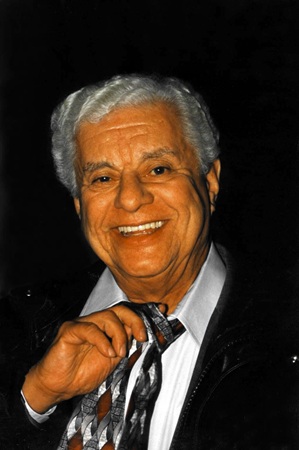
By Kingkongphoto & www.celebrity-photos.com from Laurel Maryland, USA – Tito Puentes, CC BY-SA 2.0, https://commons.wikimedia.org/w/index.php?curid=74769220; image accessed via Wikipedia.
I had no clear idea who Tito Puente was until I started researching his massive hit from the 1960s, “Oye Como Va.” Just reading his Wikipedia page was quite an experience. He grew up in New York City’s Spanish Harlem and drove the neighbors crazy when he was a boy because he was constantly pounding on pots and pans, so his mother signed him up for 25-cent piano lessons. And it only got better from there as his musical talents expanded into any number of instruments. He ended up serving in the US Navy during World War II on an aircraft carrier in the Pacific. A list of his duties as noted in Wikipedia included:
playing alto saxophone and clarinet in the ship’s big band as well as occasionally drum set, piano during mess hall, acting as the ship’s bugler, and serving as a machine gunner in the battles of Leyte and Midway. (And when did he learn to operate a machine gun? Not clear.)
This wartime experience led to two great influences on his later music career: he went on a tour of Asia, traveling for several months after the end of the war, and he attended Julliard on the G.I. bill, where he studied orchestration and conducting. (His conducting teacher there was Japanese, thus cementing those Asian influences from his travels.) From there he went on to a rich and varied career in music, becoming especially known for his playing of the timbales, a type of shallow metal drum. Because Puente was such an active and engaging performer he was usually put at the front of bands so that people could see the show he put on. (I can’t resist pointing out here that a timbale resembles an overturned flat-bottomed stew pot.) Eventually he started his own band and was a mainstay at the Palladium Ballroom during the 1950s and 60s. If you want to get more info about this remarkable man, follow this link below to his Wikipedia page.1 I, however, had better get on to the ostensible subject of this post, “Oye Como Va.”
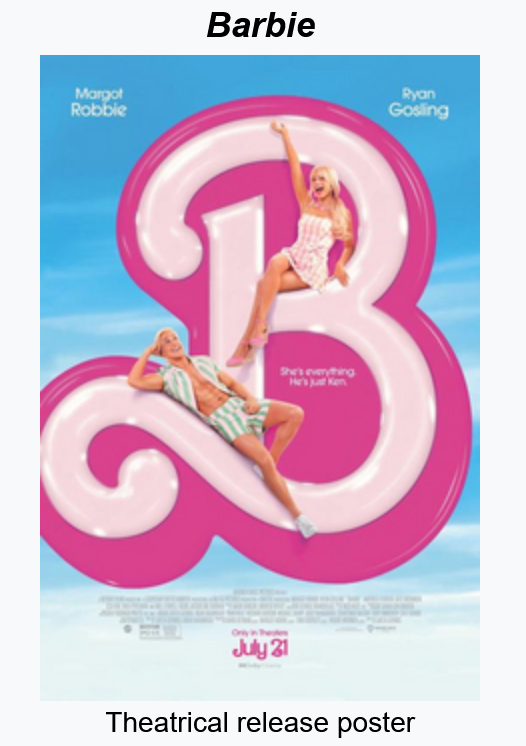
My choir, the Cherry Creek Chorale in the Denver area, performed Billie Eilish’s “What Was I Made For” from the movie Barbie in our May 2025 concert, California Dreamin’. The scene in which Barbie meets her creator, Ruth Handler (played by the great Rhea Perlman), and decides to leave Barbieland and live in the real world gets me misty-eyed every time I watch it.
(Side rant: Just because I choke up at the above scene doesn’t mean that I approve of everything in this movie, especially the portrayal of men. Honestly, folks: If there were ever to be a movie titled Ken, and women without men were to be portrayed the same way that men without women are shown in Barbie, there would be rioting in the streets—and the rioters wouldn’t be wearing pink pussy hats but Brunnhilde horned helmets, and they’d be carrying spears to boot! End of rant.)
Ho-kay. Where were we? Ah yes—Barbie’s decision to become “real.” Suddenly I realized that this is the same story as that of Pinocchio and also of the Velveteen Rabbit1, both about toys who become living creatures. Since the Chorale has sung a number from the Disney Pinocchio movie I’ve written a post about that story, which I’d encourage you to read. Pinocchio has to prove that he’s worthy of becoming a real boy by being “brave, truthful, and unselfish.” Becoming real is all upside for him once he rescues Geppetto from the whale, but it’s a different story for Barbie. Here’s the dialogue that comes right before the song, in which Barbie talks to Ruth Handler. I went to the trouble of transcribing it because I wanted to be sure that the meaning came through. I’ll post a video of the movie clip at the end of this post:
No. Hey, that was easy, wasn’t it? You can just stop reading now if you want to.
However, if you’d really like to know what “Scarborough Fair” is about, I’ll say that the true meaning is probably quite different from the impression you have. That was certainly the case for me, as I always vaguely thought as I listened to Simon and Garfunkel that the song was about a pining lover asking someone to say hello to a former true love if that someone was going to the fair where presumably the former true love was going to be. A wistful “Say ‘hi’ to him/her for me,” in other words, perhaps in the hope that the lover would say, “Oh yeah–I should get in touch.” (This sort of thing never happens.)
This is the cover art for Bohemian Rhapsody. The cover art copyright is believed to belong to the record label or the graphic artist(s). This low-res image was provided to Wikipedia and is used here under my understanding of fair use in a non-commercial and educational context.
I found myself in an interesting situation writing about a choral arrangement of songs by the British rock band Queen. I’d kinda sorta heard of them, but I would have been hard pressed to come up with any of their song titles. Until, that is, I started listening to their four hits included in the arrangement by Mark Brymer, “A Tribute to Queen.” ‘Hey, wait a minute!’ I thought. ‘That’s that song they play at football games.’ (“We Will Rock You.”) “Hey, hold on here! That’s the song Chicken Little sings after he’s improbably scored the winning run for the Oakey Oaks middle-school baseball team.’ (“We are the Champions.”) ‘Hey, what gives? Those are Weird Al Yankovic songs.’ (“Bohemian Rhapsody” and “Another One Bites the Dust,” only they’re really “Bohemian Polka” and “Another One Rides the Bus.” Not a Weird Al fan? Well, I’m sorry to hear that.) I was also vaguely aware that there’d been a movie not too long ago titled Bohemian Rhapsody which seemed to be sort of a big deal and which was about the band. (The lead actor, Rami Malek, won Best Actor for 2018.) And the name “Freddie Mercury” rang a faint bell. Well, I have to say that it’s been pretty interesting to dive into the world of Queen. I used to be a real music snob, but singing with the my own choir, the Cherry Creek Chorale, has revamped my musical taste. We sing such a variety of music, from ABBA to Alberti and Broadway to Biebl, every piece prepared and performed at the same high level of artistry, that it’s simply impossible for me to maintain my snooty attitude.
I’ve been doing a deep dive into the lyrics and the background of this mega-hit by the Queen of Soul. “Respect” has always been seen as a strong statement of a strong woman who’s insisting that her man treat her right. But is that view of the song really true? I have to admit that I was surprised when I actually looked at the words. It didn’t seem to me that the woman in the song was laying down a demand—more that she was begging for the bare minimum. (Her plea reminded me of something my mother said to me once about my room, “All I’m asking is that you at least quit throwing your clothes on the floor.”)
This cheerful, seemingly simple song is far from simple and not even all that cheerful. I’ll have to admit up front here that my rabbit trails petered out before any definitive conclusions were reached. But here’s what I was able to come up with:
Let’s start out with the original nursery rhyme about a crooked man and his various crooked accoutrements:
There was a crooked man, and he walked a crooked mile, (or, in some versions, he had a crooked smile,)
He found a crooked sixpence against a crooked stile;
He bought a crooked cat which caught a crooked mouse,
And they all lived together in a little crooked house.
Well, if you thought you were going to get a clear explication about this song, you’re going to have to just accept the fact that we live in an imperfect world. The lyrics of Toto’s “Africa” have a number of explanations that have been given by members of the band, notably by David Paich, a band keyboardist and vocalist.
Image accessed via Wikipedia; original painting is in the Museum of Modern Art, New York City
First of all, I have to confess my (former) utter ignorance about who Don McLean is. I was of course familiar with the song “American Pie,” but for some reason had never actually noticed who its original performer was. (And I’m much more taken with the parody version of it from Weird Al Yankovic.) So when I got the music for a 2017 concert with my own choir and I saw McLean’s name as the author of “Vincent,” I just assumed he was some sort of obscure artsy-jazzy guy who was interested in art and liked Vincent van Gogh. Well, au contraire! One YouTube version of McLean’s performance has had almost ten million views. (“American Pie” has had over 71 million views from one video; I didn’t go through and add up the numbers from them all but would guess it’s close to 100 million.) McLean is still alive and still performing, although none of his songs has ever approached the popularity of these two, both of which were on his second album, also titled American Pie, released in 1971.
Back in October 2015 my choir gave a concert titled “BOO!” We had so much fun with doing a Halloween-themed program. Here are three short essays about songs we sang that include some kind of monster theme.


 No. Hey, that was easy, wasn’t it? You can just stop reading now if you want to.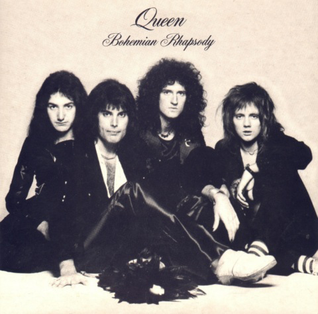


 you thought you were going to get a clear explication about this song, you’re going to have to just accept the fact that we live in an imperfect world. The lyrics of Toto’s “Africa” have a number of explanations that have been given by members of the band, notably by David Paich, a band keyboardist and vocalist.